
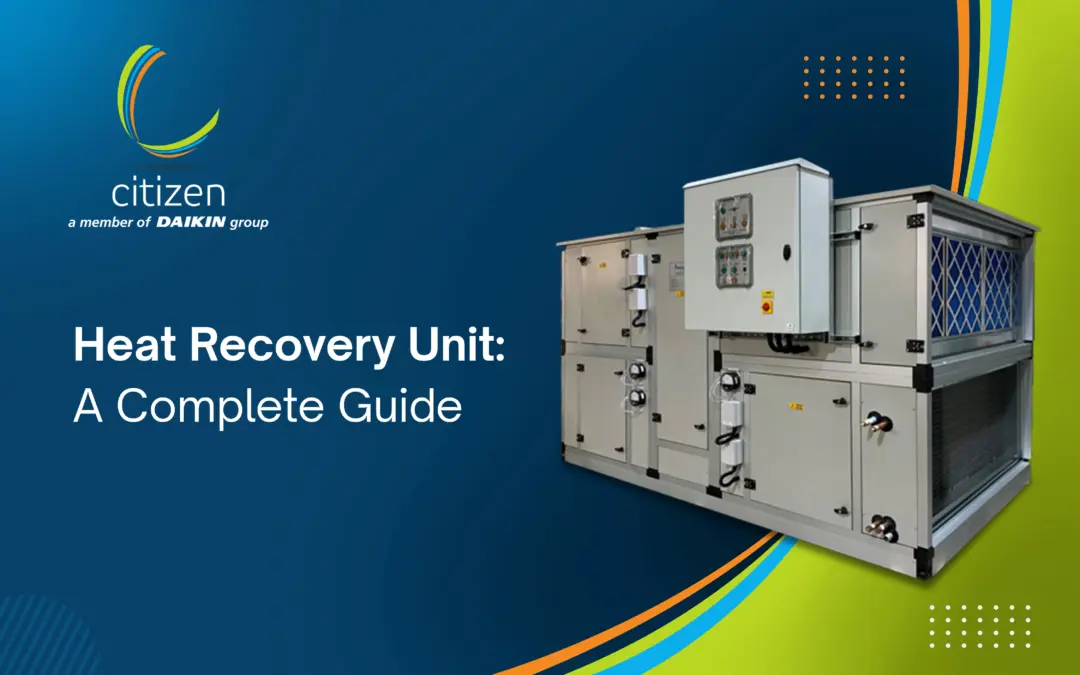
With rising energy costs, there is increasing pressure to improve efficiency in buildings without sacrificing indoor air quality. The International Energy Agency (IEA) reports that buildings are responsible for nearly 30% of final energy consumption globally, and so energy-saving HVAC solutions are more important than ever. Ventilation is needed to bring in fresh air, but it also lets conditioned air out, so HVAC systems have to work harder. And that’s where a heat recovery unit makes a big difference. It transfers heat between the outgoing and incoming air streams, minimizing energy loss while maintaining indoor comfort. In this guide, you’ll learn about how a heat recovery unit HVAC system works, where it’s used, factors that influence its performance, and how to select the right solution for your facility.
What is a Heat Recovery Unit?
Fresh air is required in all commercial and industrial buildings, but getting air in from outside is a problem. In summer, the incoming air has to be cooled, in winter it often has to be heated. At the same time, the air that has been conditioned is released to the outside through the ventilation system. This constant exchange increases the workload of the HVAC system and creates unnecessary energy waste. A heat recovery unit is intended to recover usable heat from exhaust air before it leaves the building.
It is simple but very effective.” Outdoor and exhaust air are carried through the unit in separate passages. A heat exchanger between these passages transfers thermal energy from the outgoing air to the incoming fresh air without mixing the two air streams. The preconditioned fresh air then moves into the air handling unit, which requires much less heating or cooling to achieve the target indoor temperature.
The operation of a heat recovery unit HVAC system is determined by the interaction of multiple components. The heat exchanger recovers heat. Supply and exhaust fans provide balanced air flow. Filters keep dust and contaminants out of the system. Dampers regulate air flow. The control system modulates operation based on occupancy or ventilation demand. Depending on the application, manufacturers use technologies such as plate heat exchangers, rotary heat recovery wheels, heat pipes or run-around coil systems. The right technology will not only improve energy efficiency, but it will also help maintain indoor temperatures, reduce operating costs and ensure consistent ventilation performance throughout the year.
Where Does a Heat Recovery Unit Deliver the Highest Value?
Not every building needs a heat recovery unit, but in facilities where fresh air is supplied continuously, it can make a noticeable difference in both energy use and operating costs. The more outside air a building requires, the greater the opportunity to recover energy that would otherwise be wasted.
Industries that benefit the most include:
- Hospitals
- Pharmaceutical manufacturing facilities
- Clean rooms
- Commercial buildings
- Hotels
- Office spaces
- Manufacturing plants
In such conditions, ventilation cannot be reduced for the sake of energy saving. A heat recovery unit HVAC system helps to recover thermal energy from exhaust air before it leaves the building, reducing the amount of heating or cooling needed for incoming fresh air.
There are real benefits, and they can be measured. It saves energy, reduces the load on the air handling unit system, provides a more stable indoor temperature and improves indoor air quality with a constant supply of filtered fresh air. Less energy consumed means lower operating costs and helps to meet sustainability goals without sacrificing occupant comfort.
So, choosing the right unit is equally important. First, match the airflow capacity to the ventilation requirement of the building. Then look at the local climate, because that will dictate what heat recovery technology is best suited. You should also check the pressure drop as more resistance means more fan power consumption.
And finally, think beyond efficiency ratings. The installation space and ease of maintenance will impact long-term performance, as will compatibility with the existing air handling unit. Many air handling unit manufacturers are now able to offer project specific solutions. Some manufacturers in India offer customized systems to suit different building and process requirements rather than relying on standard configurations.
Performance Factors That Determine Heat Recovery Unit Efficiency
The performance of a heat recovery unit is defined not only by its efficiency rating. Even the best quality unit can fail to perform if it is installed or maintained incorrectly or operated in unsuitable conditions. That’s why engineers look at the whole system, not just a single specification.
Outdoor climate matters
Climate has a direct impact on heat recovery performance. Buildings located in regions with large indoor and outdoor temperature differences usually recover more energy than those in mild climates. Selecting the right heat recovery technology for local weather conditions is therefore an important design decision.
Airflow balance is critical
Supply and exhaust air flows should be balanced. If one side moves a lot more air than the other, the heat exchanger cannot efficiently transfer energy. Well balanced air flow also contributes to maintain the indoor pressure stable.
The condition of components affects efficiency
Several components influence daily performance:
- Clean filters reduce pressure loss.
- Efficient fans consume less electricity.
- Well-sealed cabinets prevent air leakage.
- A high-performance heat exchanger transfers more usable energy.
Ignoring any one of these can gradually reduce overall system efficiency.
Controls play an important role
Modern heat recovery unit HVAC systems use bypass dampers and automatic controls to adjust operation according to outdoor conditions. In applications where humidity is important, the system may recover both sensible heat (temperature) and latent heat (moisture), improving indoor comfort while reducing HVAC energy demand.
Installation and maintenance cannot be overlooked
Many efficiency problems are caused after installation rather than during manufacturing. Poor duct connections, incorrect airflow balancing, dirty filters, and delayed maintenance all reduce the performance of both the heat recovery unit and the air handling unit. Regular inspection and preventive maintenance help maintain energy savings and reliable operation throughout the system’s service life.
Heat Recovery Unit Maintenance and Common Mistakes
Many people expect a heat recovery unit to deliver the same level of performance throughout its service life. In reality, the biggest losses usually come from design and maintenance issues rather than the equipment itself. A well-built unit cannot compensate for poor planning or neglected servicing.
One of the first things to get right is sizing. A unit selected only on the basis of available space or budget may never achieve the expected efficiency. The ventilation requirement, occupancy, operating hours, and building layout should always be considered together. Installation quality is just as important. Air leakage from duct joints, incorrect airflow balancing, or restricted airflow can reduce heat recovery long before any component fails.
Good maintenance can be easy. A routine inspection should include cleaning or changing filters, checking the heat exchanger, ensuring proper fan operation, inspecting dampers and ensuring that supply and exhaust air is still properly balanced. Monitoring pressure drop and airflow over time also helps catch small problems before they turn into costly repairs.
Choosing the right equipment is only part of the equation. Working with an experienced manufacturer often has a greater impact on long-term performance than many buyers realize. With nearly four decades of HVAC expertise, Citizen Industries Pvt Ltd designs customized solutions that match the actual needs of each project instead of offering a one-size-fits-all approach. This commitment to engineering, product quality, and application-specific design is why consultants, contractors, and facility managers continue to trust Citizen Industries Pvt Ltd for reliable air handling unit and ventilation solutions across a wide range of industries.
