
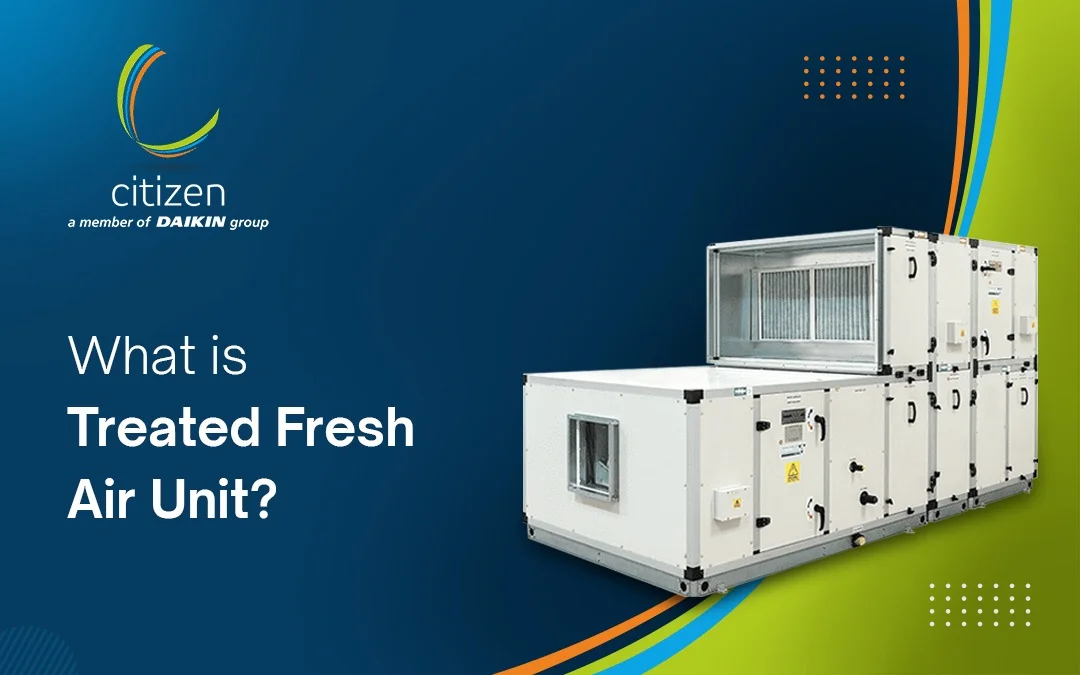
Fresh air sounds simple, but in today’s buildings it is one of the hardest things to manage. In Indian cities, outdoor air carries heat, moisture, dust, and pollution, and when this air is brought inside without proper treatment, it quickly upsets comfort and increases cooling load. Many HVAC systems fail not because of poor equipment, but because fresh air is handled as an afterthought. This is why treated fresh air units have become a key part of modern HVAC design, especially in spaces where comfort, hygiene, and energy control cannot be compromised.
What is a Treated Fresh Air Unit?
A Treated Fresh Air Unit is a system that manages outdoor air before it is supplied inside your building. Instead of directly pulling outside air into the space, it first filters it, cools it, and controls the moisture level so the air feels comfortable the moment it enters.
In many projects, fresh air is added just to meet ventilation requirements. But untreated air carries heat, humidity, and fine particles. When this air is supplied without proper conditioning, it affects comfort and puts extra load on the cooling system. A TFA unit prevents that by preparing the air separately.
You can think of it as a dedicated system for fresh air. It does not replace your main cooling setup; it supports it. By handling ventilation air independently, it keeps indoor conditions stable and helps the overall HVAC system perform smoothly, especially in buildings that operate for long hours.
How Does a TFA Unit Work?
A TFA unit handles outside air in a fixed sequence so that by the time it reaches the building, it is already under control. Here’s how it actually happens.
Outdoor Air Entry
The unit pulls air directly from outside through an intake hood or duct. This air usually carries heat, moisture, and fine dust especially in Indian metro cities.
Dust Removal Through Filters
Before anything else, the air passes through filters. These filters trap larger particles first, then finer dust. In hospitals or clean areas, higher filtration levels are added depending on the requirement.
Cooling Coil Section
After filtration, the air moves across the cooling coil. This is where the major change happens. The air temperature drops, and at the same time, moisture in the air starts to condense on the coil surface. In humid weather, this step makes a noticeable difference in comfort.
Water Drain Handling
The condensed water is collected and drained out properly. If this part is not designed well, it can create long-term maintenance issues, so proper slope and drainage are important.
Air Supply to the System
Once the air reaches the desired condition, a fan pushes it forward either directly into the occupied area or into the connected distribution system. Because the fresh air has already been stabilized, the rest of the cooling setup does not get sudden load fluctuations.
That’s the working in practical terms. The idea is simple: control the fresh air first, so the main cooling system does not struggle later.
Benefits of Using a TFA Unit
The effect of treated fresh air unit is usually noticed within days of operation. Not because the system looks different, but because space starts behaving differently.
Cleaner and more stable indoor air
When fresh air is treated before entering the building, dust levels stay under control throughout the day. Spaces feel less heavy, especially in areas with continuous occupancy. In hospitals and offices, this steady air movement reduces the stale smell that often builds up when ventilation is handled poorly.
Humidity stays where it should
In Indian weather, humidity is the real troublemaker. Fresh air brings in a large amount of moisture, and if that moisture enters the space untreated, comfort drops quickly. A TFA unit removes this excess moisture early, which helps avoid condensation, sticky indoor conditions, and long recovery times for the cooling system.
Reduced pressure on the cooling setup
When the fresh air load is handled separately, the main system is not forced to manage sudden heat and moisture swings. This keeps temperatures more consistent and helps the equipment run smoothly for longer hours. Over time, this controlled operation reflects in better energy use and fewer operational issues.
These benefits are the reason TFA units are now planned as part of the system design, not added later as a correction.
Why TFA Units Became Important in Modern Indian Buildings?
If you look at buildings constructed 15–20 years ago, most of them had more natural air leakage. Windows opened, structures were not tightly sealed, and occupancy levels were lower. Today’s buildings are very different. Glass façades, centralized cooling, and sealed environments have become standard. Fresh air does not enter naturally anymore it has to be planned and controlled.
At the same time, Indian cities are dealing with higher dust levels and seasonal humidity. During monsoon months, outdoor air carries heavy moisture. In summer, the heat load is intense. Simply pulling this air inside without treatment creates discomfort and increases strain on the cooling system.
Occupancy has also changed. Offices operate for longer hours, hospitals run continuously, and commercial spaces handle dense footfall. Ventilation is no longer just about compliance; it directly affects comfort, hygiene, and overall system stability.
Because of these changes, fresh air cannot be handled casually. It needs to be conditioned properly before entering the building. That shift in building design, climate conditions, and usage patterns is why TFA units have become a necessary part of modern HVAC planning in India.
Difference Between TFA Unit vs Fresh Air Fan vs AHU
| Aspect | TFA Unit | Fresh Air Fan | Air Handling Unit |
| Basic role | Supplies outdoor air after filtering, cooling, and moisture control | Pushes outside air directly into the building | Circulates and conditions indoor air within the system |
| Air treatment level | Fully treated before supply | No treatment, only air movement | Treats mainly return and mixed air |
| Humidity handling | Actively removes moisture from fresh air | No humidity control | Limited control, depends on system design |
| Impact on comfort | Maintains stable indoor conditions | Often causes discomfort due to heat and moisture | Maintains comfort once air is already controlled |
| Effect on system load | Reduces load on the main system | Increases load on cooling equipment | Handles internal load, not raw outdoor air |
| Typical use | Hospitals, offices, malls, airports | Basements, staircases, simple ventilation needs | Commercial and industrial buildings |
| System position | Works alongside the main system | Works independently | Core part of the HVAC setup |
Why Choose Citizen Industries Pvt Ltd
Designing fresh air systems is not just about selecting equipment; it is about understanding how buildings actually operate in Indian conditions. This is where Citizen Industries Pvt Ltd brings real value. With years of hands-on experience in ventilation and air management, the company understands the challenges faced in hospitals, commercial spaces, industrial facilities, and large infrastructure projects.
Citizen Industries focuses on building systems that work reliably over long operating hours. From airflow planning to moisture control and filtration, every unit is engineered with practical site conditions in mind. As one of the trusted air handling unit manufacturers in india, the company follows proven manufacturing practices and quality standards that support consistent performance.
