
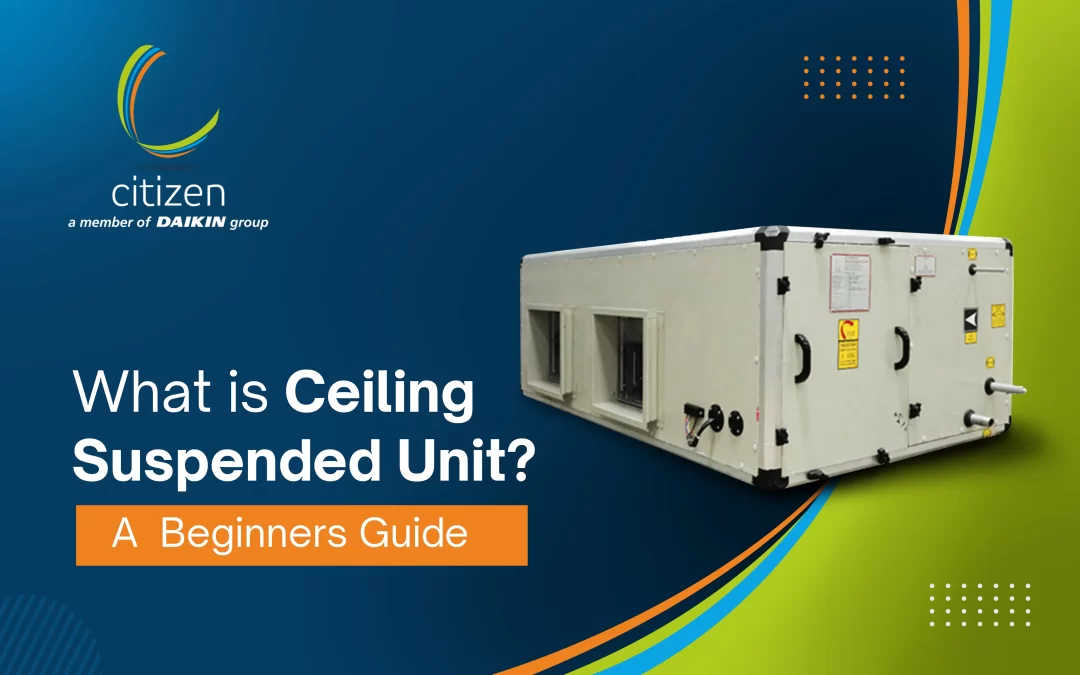
In many commercial and industrial buildings, space is always limited. Architects want clean ceilings, consultants want efficient cooling, and facility teams want systems that are easy to maintain. This is where ceiling suspended unit systems become important.
According to recent HVAC project data from India, nearly 35–40% of medium-capacity cooling systems in offices and retrofit projects still rely on ceiling-mounted solutions due to height and layout constraints. Yet, many first-time buyers and even junior engineers are not fully clear about how these units work, where they should be used, and where they should not.
This guide explains everything you need to know about ceiling suspended systems in a simple and practical way.
What Is a Ceiling Suspended Unit?
A ceiling suspended unit is an indoor HVAC unit that is mounted below the ceiling slab and used to cool or circulate air in enclosed spaces where floor-mounted equipment or full duct systems are not practical. It is designed mainly for comfort cooling and air movement, not for high-capacity air treatment.
Unlike cassette units that are concealed within a false ceiling, a ceiling suspended unit remains visible and is fixed using hangers or threaded rods. Air is drawn from the room, passed through a cooling or heating coil, and then supplied back into the space through adjustable louvers.
These units typically handle limited air volumes and operate with basic filtration. Because of this, they are suitable for offices, retail areas, control rooms, and retrofit projects, but they cannot replace a full air handling unit in applications that demand high fresh air intake, advanced filtration, or strict air quality control.
In practical HVAC design, ceiling suspended units are chosen when ceiling height is restricted, installation time is limited, or budget constraints make large ducted systems impractical.
How Does a Ceiling Suspended Unit Work?
A ceiling suspended unit works by drawing warm air from the room, cooling or heating it inside the unit, and then supplying the conditioned air back into the same space. The process is continuous and designed mainly for comfort cooling.
Room air enters the unit through the return opening and passes through a basic filter that removes large dust particles. The filtered air then flows over the cooling or heating coil. When chilled water or refrigerant passes through the coil, heat from the air is absorbed, reducing the room temperature.
As the air cools, moisture present in the air condenses on the coil surface. This condensate is collected in a drain tray and discharged safely through a drain pipe, which is critical in humid climates like India.
A fan inside the unit pushes the conditioned air back into the room through adjustable louvers, ensuring even air distribution. Temperature control is handled through a wall-mounted thermostat, which switches the unit on or off based on the set comfort level.
Because ceiling suspended units handle limited air volumes and basic filtration, they are not intended for high fresh air intake or precise air quality control. Their operation is focused on maintaining comfortable indoor conditions in smaller commercial and utility spaces.
Ceiling Suspended AHU: Is It the Same Thing?
A ceiling suspended ahu is often misunderstood. While both systems may look similar, they are not always the same.
A suspended AHU is designed to handle larger air volumes, higher static pressure, and more advanced filtration. It may include double-skin panels, better insulation, and access doors for maintenance.
In contrast, a standard ceiling suspended unit is meant for comfort cooling only. It does not replace a full air handling system in applications that demand strict air quality control.
Where Are Ceiling Suspended Units Commonly Used?
These units are selected mainly based on space and budget constraints. Common applications include:
- Office floors with open ceilings
- Retail outlets and showrooms
- Electrical and control rooms
- Small industrial workspaces
- Renovation projects where ducting is not possible
They are also useful in buildings where false ceilings are avoided to reduce construction cost or increase usable height.
Advantages of Ceiling Suspended Units
One of the biggest advantages is installation flexibility. Since these units do not require a false ceiling, they can be installed quickly and with minimal civil work.
Other benefits include:
- Lower initial cost compared to large AHUs
- Easy access for maintenance
- Faster project execution
- Suitable for retrofit applications
For many projects, these advantages make them a practical choice rather than a compromise.
Limitations of Ceiling Suspended Units You Should Know
Despite their usefulness, ceiling mounted air handling unit have clear limitations.
They are not suitable for:
- Hospital operation theatres
- Clean rooms
- Large malls or airports
- Areas requiring high fresh air intake
Their filtration capacity is limited, and noise control can be a challenge if not planned correctly. They also cannot replace a full air handling unit in applications that demand precise air quality control.
Understanding these limits helps avoid system failure and user discomfort.
Key Selection Factors for Ceiling Suspended Units
When choosing a ceiling suspended ahu, several technical factors must be carefully evaluated to ensure efficient performance and user comfort:
- Cooling Capacity – Match the unit’s cooling output with the actual heat load of the space. Oversized or undersized units reduce efficiency and comfort.
- Ceiling Height and Structure – Verify if the ceiling can support the unit’s weight and ensure there is enough clearance for air circulation and maintenance.
- Airflow Requirement – Determine the required air volume for the space to maintain uniform temperature and comfort.
- Noise Levels – Check sound ratings, especially in offices, hospitals, or classrooms, to avoid disturbance.
- Fresh Air Requirement – Assess whether the space needs additional outdoor air and if the unit can handle it or requires a separate system.
- Filtration Needs – Ensure the unit’s filter efficiency matches the indoor air quality requirements for dust, pollen, or minor contaminants.
- Maintenance Accessibility – Confirm there is enough space for cleaning, coil servicing, and fan maintenance.
- Energy Efficiency – Look for units with optimized fan and coil design to minimize energy consumption.
- Installation Type – Decide between a standard ceiling suspended unit or a ceiling suspended AHU based on airflow, pressure, and filtration needs.
- Project Budget & Timeline – Consider unit cost, installation complexity, and project deadlines to select the most practical option.
Why Choose Citizen Industries Pvt Ltd for Your Ceiling Suspended Unit
Choosing the right manufacturer is crucial for HVAC performance. Citizen Industries Pvt Ltd brings decades of experience in designing and manufacturing ceiling suspended units for offices, industrial areas, malls, airports, and commercial spaces across India.
We provide customizable solutions tailored to airflow, ceiling height, and space requirements. Our products adhere to strict quality standards, including Eurovent-certified AHUs, ensuring reliability and verified performance.
With a strong pan-India presence, we offer consultation, installation guidance, and maintenance support. Our focus is on practical, efficient, and long-lasting units that meet real-world needs. Working with Citizen Industries means choosing a manufacturer trusted for experience, technical expertise, and consistent quality.
