
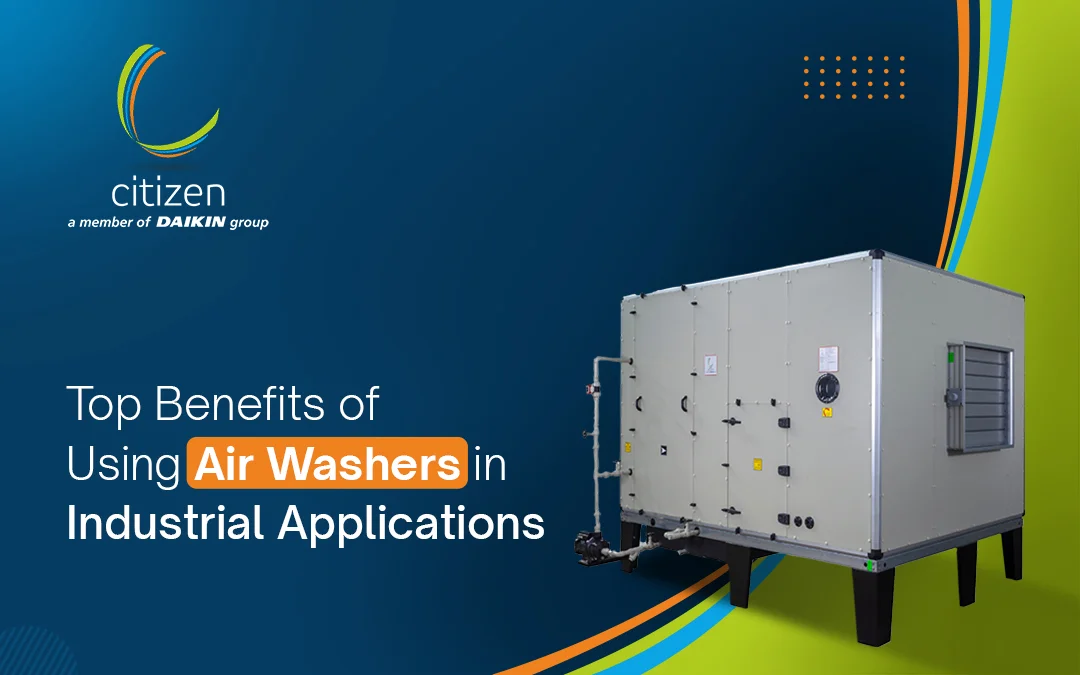
In industrial HVAC systems, ventilation and cooling can account for up to 40% of a facility’s total energy consumption, with a significant portion dedicated just to treating outdoor air for temperature and humidity control. Traditional refrigeration-based systems such as chillers and DX units often require large amounts of energy, especially when 100% fresh air is introduced into production spaces. As industry standards like ASHRAE 62.1 drive higher ventilation rates to meet indoor air quality norms, the energy cost associated with conditioning outdoor air continues to rise.
This is where the industrial air washer stands out. Based on the evaporative cooling principle adopted in Chapter 41 of the ASHRAE Handbook, systems that use water for cooling and air washing can reduce HVAC energy loads by 30% to 60% compared to conventional refrigeration methods under appropriate conditions.
By simultaneously filtering particulate matter, lowering air temperature, and maintaining humidity, air washers deliver multiple layers of air treatment in one simple system. For industrial facilities looking to balance ventilation effectiveness, energy efficiency, and equipment reliability, understanding the role of air washers in modern HVAC design is essential.
Understanding How an Air Washer Works in Industrial Conditions
An air washer is a mechanical system designed to treat large volumes of air by passing it through a controlled water spray. Outside air enters the unit and moves through a spray chamber where water droplets come in direct contact with the air stream. During this process, dust particles, fumes, and other airborne impurities get trapped in the water.
At the same time, partial evaporation of water reduces the air temperature. The washed air then passes through eliminators that remove excess moisture before it is supplied to the workspace. Unlike comfort cooling systems, an air washer focuses on air treatment rather than temperature control alone.
In industrial installations, air washers are often integrated with an air handling unit for better airflow control and uniform distribution. When designed properly, this setup ensures stable performance even under high dust and heat loads, which are common in manufacturing plants.
Effective Removal of Dust and Industrial Pollutants
One of the strongest advantages of using an air washer in industrial environments is its ability to handle heavy dust conditions. Industries such as cement, textile, foundry, and metal processing generate airborne particles that quickly block dry filters. Frequent filter replacement not only increases maintenance cost but also leads to system downtime.
An air washer works on wet scrubbing, which makes it far more suitable for such applications. Dust particles stick to water droplets and are removed continuously from the air stream. Since the washing process does not rely on fine dry filters, pressure drop remains stable over long operating hours.
This makes air washers especially useful in areas where dust concentration is high and consistent air quality is required throughout the day without frequent intervention.
Cooling and Humidity Control in a Single Process
In many industrial processes, cooling alone is not enough. Certain operations require controlled humidity levels to maintain product quality and process stability. Textile mills, paper plants, and packaging units are common examples.
An air washer provides evaporative cooling, which naturally lowers air temperature while increasing moisture content. Unlike conventional air coolers, industrial air washers are designed for controlled air flow, proper water distribution, and uniform air treatment.
This dual function of cooling and humidity control helps industries maintain stable working conditions without the need for additional equipment. It also prevents problems like static electricity, material drying, or fiber breakage that occur in low-humidity environments.
Lower Energy Consumption Compared to Chiller-Based Systems
Energy efficiency is a major concern for industrial facility managers. Chiller-based systems consume high electrical power due to compressors, complex controls, and continuous operation under load. In contrast, an air washer uses only fans and water circulation pumps.
In Indian climatic conditions, especially in dry and semi-dry regions, air washers deliver effective cooling at a fraction of the energy cost. Many industries use them for non-critical zones such as production floors, loading areas, and workshops where precision temperature control is not required.
By reducing peak power demand, air washers also help industries manage electricity costs and avoid penalties related to maximum demand charges.
High Fresh Air Capacity for Industrial Ventilation
Industrial ventilation standards increasingly emphasize the need for fresh air to dilute heat, fumes, and airborne contaminants. Recirculating air is often avoided in factories where process emissions are present.
An air washer is well suited for 100% fresh air operation. It treats incoming air before supplying it to the workspace, ensuring better air quality without complex heat recovery systems. When combined with a well-designed airflow pattern, it helps maintain acceptable temperature and cleanliness across large areas.
In facilities where Treated Fresh Air units are not feasible due to cost or maintenance constraints, air washers offer a practical alternative.
Simple Construction and Low Maintenance Requirements
Industrial environments are harsh on HVAC equipment. Dust, moisture, and temperature fluctuations can quickly affect sensors, electronics, and delicate components. Air washers have a simple mechanical design with minimal electronic dependency.
Routine maintenance usually involves checking spray nozzles, cleaning the sump, and ensuring proper water circulation. With proper water quality management, these systems operate reliably for many years.
This simplicity makes air washers a preferred choice in plants where skilled HVAC maintenance resources are limited and system uptime is critical.
Improved Working Conditions for Industrial Personnel
While industrial cooling systems are often selected based on process needs, worker comfort cannot be ignored. Poor air quality and excessive heat directly affect productivity, focus, and absenteeism.
Air washers improve indoor conditions by reducing airborne dust, lowering temperature, and maintaining breathable air. Workers experience less fatigue, better visibility, and improved overall comfort, even in non-air-conditioned industrial spaces.
Over time, these improvements contribute to a healthier work environment and reduced long-term health risks.
Industries Where Air Washers Deliver the Best Results
Air washers are particularly effective in industries such as textiles, cement plants, foundries, paper mills, power plants, and large fabrication units. They are ideal for applications where high air volume, dust control, and moderate cooling are required.
However, they are not suitable for areas that demand precise temperature and humidity control, such as pharmaceutical cleanrooms. In such cases, advanced systems like a Eurovent certified AHU are more appropriate.
Choosing the right system depends on process requirements, climate conditions, and long-term operating costs.
Why Choose Citizen Industries Pvt Ltd for Industrial Air Washers
Choosing the right supplier is as important as selecting the right system. Citizen Industries Pvt Ltd brings decades of experience in designing air washers that perform reliably in demanding industrial conditions. Each industrial air washer is engineered with a clear focus on airflow efficiency, uniform water distribution, and long-term durability. Backed by strong in-house manufacturing and testing capabilities, Citizen products are built to integrate smoothly with an air handling unit setup where required. As one of the trusted air handling unit manufacturers in India, Citizen follows proven engineering practices aligned with global standards. The result is equipment that delivers consistent air quality, lower operating cost, and dependable performance across varied industrial applications.
